
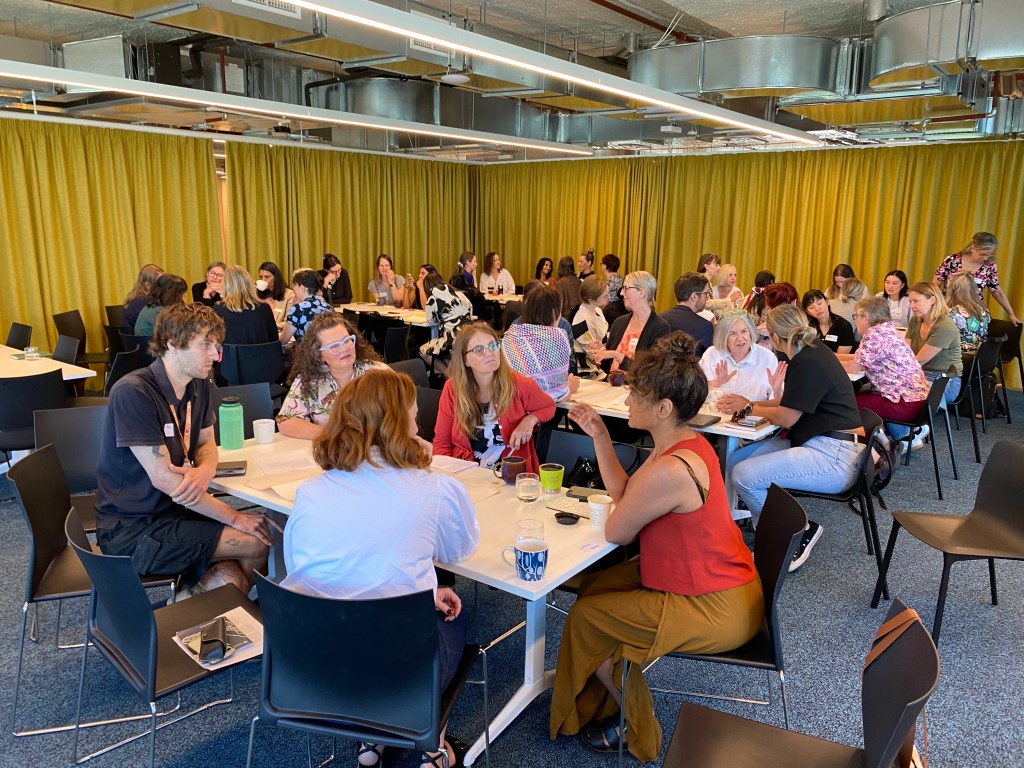
Last week, on December 2nd, over 60 Victorian organisations and leaders came together for an Extreme Heat and Gender Symposium hosted by the Greater Melbourne Heat Alliance, and supported by Sweltering Cities. The purpose of the event was to understand how gender impacts how safe you are in a heatwave, how rising temperatures intersect with issues of gender justice, and what can be done to support women, girls and gender diverse people to be leaders in heat resilience.
The Greater Melbourne Heat Alliance was founded in 2023 to bring together organisations and leaders from across the city who are working to reduce the impacts of rising temperatures, support communities to build resilience, and tackle the root causes of heat vulnerability. During a Heat Alliance meeting earlier this year, we agreed that the gendered impacts of extreme heat was an important issue for us to speak about as a collective. The backdrop of this event is the reality that heatwaves are becoming longer, hotter and more frequent, and as organisations working directly with communities it’s our responsibility to be talking about and tackling heat fromall angles, including gender, which is often overlooked in mainstream conversations about rising temperatures.
A global perspective on heat and gender
To kick off the symposium and provide a global perspective on the connections between heat, gender and resilience, Krista Milne, City of Melbourne’s Co-Chief Heat Officer, interviewed Climate Resilience for All’s Chief Executive Officer Kathy Baughman McLeod about the ways heatwaves disproportionately affect women and girls, and how we cansupport womento become climate leaders. Kathy spotlighted the trailblazing work of the Chief Heat Officers around the world, a global network of women leading efforts to build safer, more heat-resilient cities that can withstand the impacts of rising temperatures and heatwave disasters.

Panel discussion: how should we be thinking about the gendered impacts of extreme heat disasters and supporting leadership?
We then heard from an incredible panel of women, including Margareta Windisch, Lecturer and Coordinator of Social Work Field Education at RMIT, who discussed how housing inequality worsens the impacts of extreme heat, particularly for older women who are underrepresented in conversations about heatwave preparedness but overrepresented in heatwave mortality. Also on the panel was Loriana Bethune and Shweta Kawatra Dakin. Loriana is the Research and Innovation Manager at Gender and Disaster Australia, who spoke about ways disaster responses can better address the gendered impacts of rising temperatures and heat impacts. Shweta is the Manager of Early Intervention at GenWest, and shared with us powerful stories of the leadership of migrant women in Melbourne during and after climate disasters. Together, the panel examined how gender, culture, inequality, and social roles impact people’s experiences of extreme heat and their ability to adapt and cope to its impacts.

From left to right: Shweta Kawatra Dakin, GenWest, Margareta Windisch, RMIT and Loriana Bethune, Gender and Disaster Australia.

Interactive case studies
To build on the powerful discussions from the panel, we then split into groups to explore case studies presented by organisations in Melbourne working directly with communities affected by extreme heat. The purpose of the case studies was to brainstorm ideas, get inspired, and think about actions we can take as organisations to better support the communities we work with to prepare for and cope with heat impacts, with a focus on gender. By exploring real-world examples from local organisations, the goal was to spark discussions on how we can make sure our services, and planning are as responsive as they can be to support those most impacted by rising heat disasters.

Robyn Erwin from Wellsprings for Women presented a case study which explored how extreme heat makes it harder for the women who use their services to travel to their centre and puts extra strain on services. Awhina Kapa from CoHealth shared a case study about the challenges faced by older adults living in high-rise housing, where it’s difficult to stay cool without proper insulation or air conditioning, and the importance of listening to residents about what support would make a real difference to their wellbeing before and during heatwaves.
Nell Reidy from the National Indigenous Disaster Resilience program shared a case study about a large Aboriginal Community Controlled Health Organisation that is a vital support to the local Indigenous community. She spoke about how this service becomes a vital refuge during heatwaves for families living in overcrowded and poorly insulated homes, with staff visiting elders and families to ensure they are safe. These interactive case studies gave everyone a deeper understanding of the ‘long tail’ of extreme heat and its far reaching impacts. They also sparked ideas for community led actions that organisations will take back to their teams to implement, and report back in the next Greater Melbourne Heat Alliance meeting.

With the upcoming Melbourne summer predicted to be muggy and hot, and heat records continuing to be smashed, this event created momentum for organisations working with diverse communities across Melbourne to prioritise the gendered impacts of heatwaves when planning how we engage with communities during hot summers.
 Greater Melbourne Heat Alliance
Leave a comment