
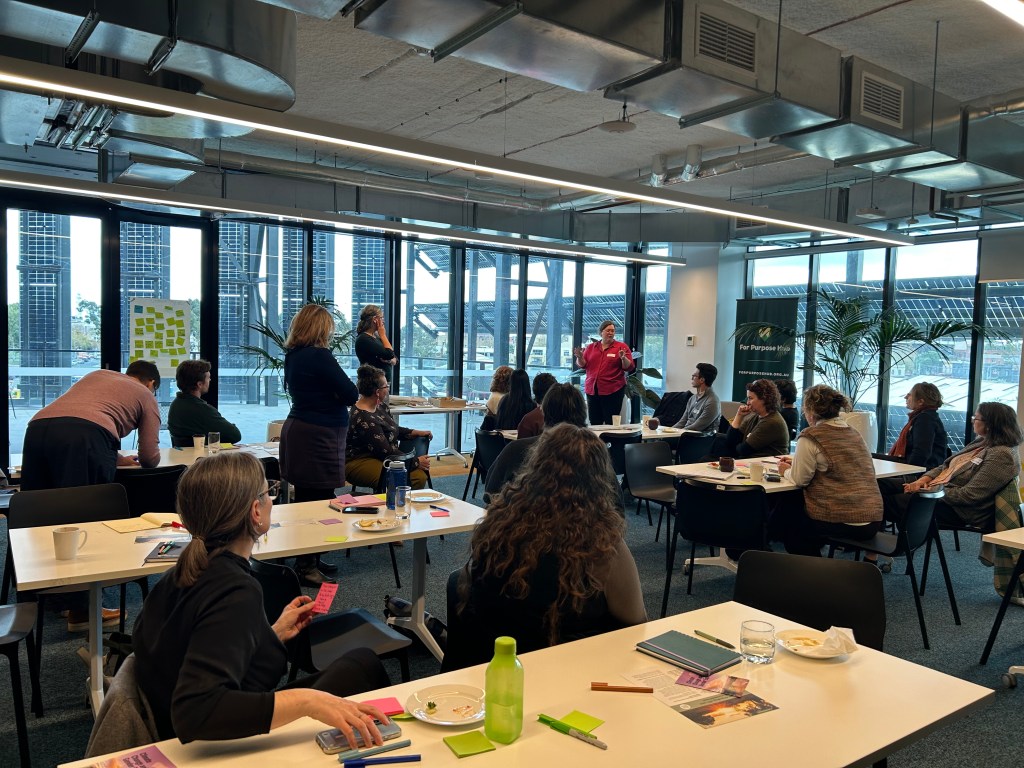
On June 3rd, community leaders, researchers, advocates, local government representatives and social service organisations came together in Melbourne for a critical conversation about one of the defining challenges facing our city: how do we build a safe, sustainable, and thriving social sector in a hotter future?
Hosted by the Greater Melbourne Heat Alliance (GMHA) in collaboration with VCOSS, GenWest, Jesuit Social Services Centre for Just Places and the Greater Melbourne Foundation, the three-hour workshop moved beyond discussion and into strategy. Participants explored how extreme heat is already affecting communities and services, what evidence is needed to drive action, and what a resilient, equitable future could look like.
Heat Is More Than a Weather Event
The workshop opened with a powerful reminder that extreme heat is not simply a seasonal inconvenience. It is a growing climate risk that places pressure on people, services, infrastructure and organisations across Melbourne.
Drawing on lessons from the work of the National Indigenous Disaster Resilience project and the Victorian Policy Roundtable on Aboriginal Disaster Resilience, participants heard calls for stronger recognition of First Peoples’ leadership in disaster planning and response. Emma Bacon highlighted the disproportionate impacts of disasters on First Nations communities and the importance of ensuring First Nations voices are centred in governance, decision-making and adaptation planning.
Lived Experience Reveals the Reality of Heat
One of the most powerful contributions came from Alex Paine, who shared experience of living with multiple sclerosis and navigating extreme heat while relying on public transport and community services.
While many community facilities offer air conditioning once people arrive, Alex highlighted a less visible challenge: getting there safely.
Waiting for public transport in high temperatures, travelling long distances for essential services, accessing fresh food and making decisions about whether to attend appointments all become significantly harder during hot weather. For many people with disabilities, chronic illnesses or limited financial resources, heat adds another layer of complexity to everyday life.
Participants reflected on how often responsibility is placed on individuals to manage their own safety, despite many of the risks being shaped by broader systems, infrastructure and policy decisions.
The discussion reinforced the need for accessible cooling spaces, heat refuges, reliable transport and services that are designed around the realities of living through extreme heat.
A quote from Alex that stood out:
“It’s not any one specific thing, it’s a combination of poor infrastructure from government, and social services trying to do what they can to bridge the gap”
Heat Has Social Consequences
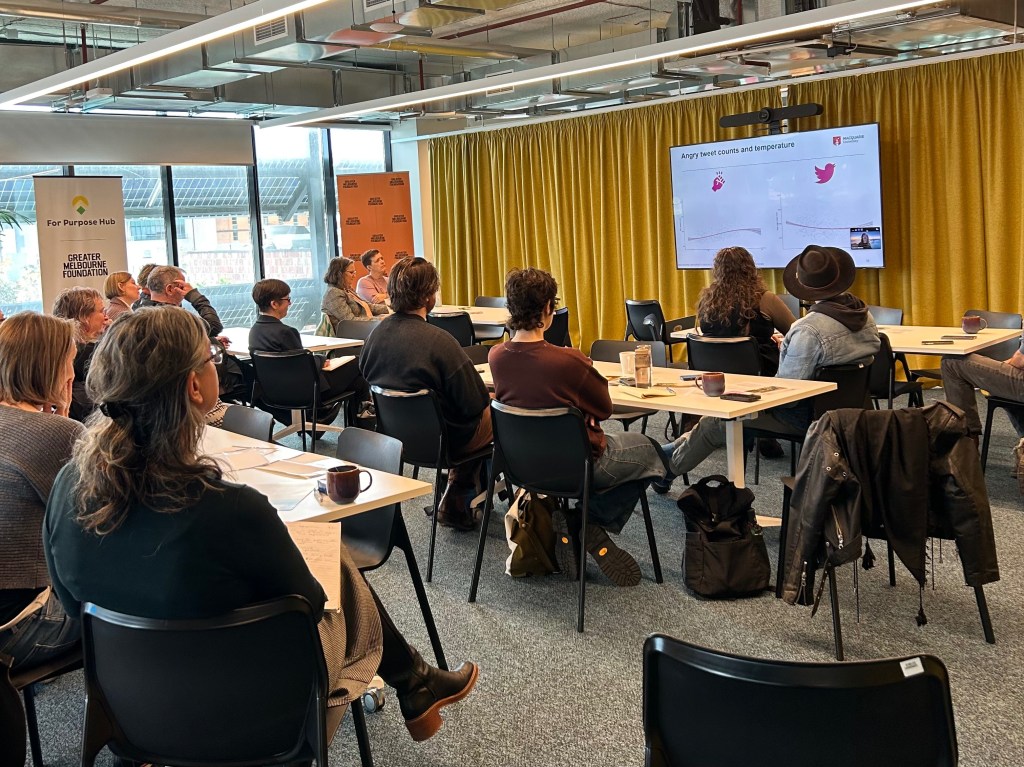
Dr Heather Stevens presented emerging research examining the relationship between temperature and interpersonal violence.
Her work demonstrates that rising temperatures are associated with increases in violent crime, particularly assaults. The impacts are felt across age groups and genders, but are especially pronounced in lower socioeconomic areas. Research also indicates that indoor violence, including domestic violence, is particularly sensitive to rising temperatures.
The presentation highlighted an important shift in understanding heat. It is not only a public health issue, but also a social issue with implications for family violence services, health systems, emergency responses and community wellbeing.
As temperatures rise, the social consequences of heat cannot be separated from broader conversations about inequality, housing, mental health and community safety.
What We Already Know
The session only reinforced what was found in the research for the Greater Melbourne Heat Resilience Snapshot. The snapshot draws together community insights, policy analysis and current evidence to assess Melbourne’s preparedness for extreme heat.
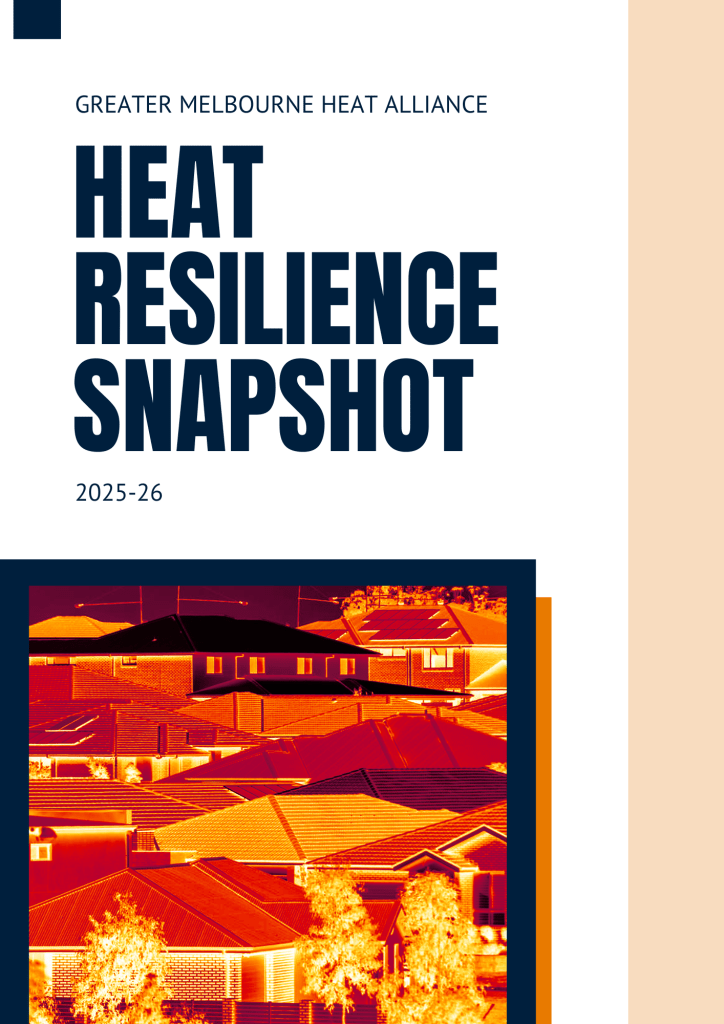
The snapshot paints a concerning picture.
Participants noted that while some progress has been made, investment remains fragmented and communities most affected by heat are not receiving sufficient support. Housing, planning, funding and coordination emerged as some of the weakest areas of resilience, while local governments seem to be much more engaged in heat resilience efforts than state and federal governments.
Key themes from the Snapshot included:
- Short-term and fragmented funding arrangements.
- Poor coordination across government agencies and levels of government.
- Inadequate housing standards and limited retrofit programs.
- A lack of meaningful inclusion of communities most affected by heat in decision-making processes.
- Growing pressure on community organisations expected to respond without additional resources.
Mapping the Asks
The second part of the workshop focused on solutions.
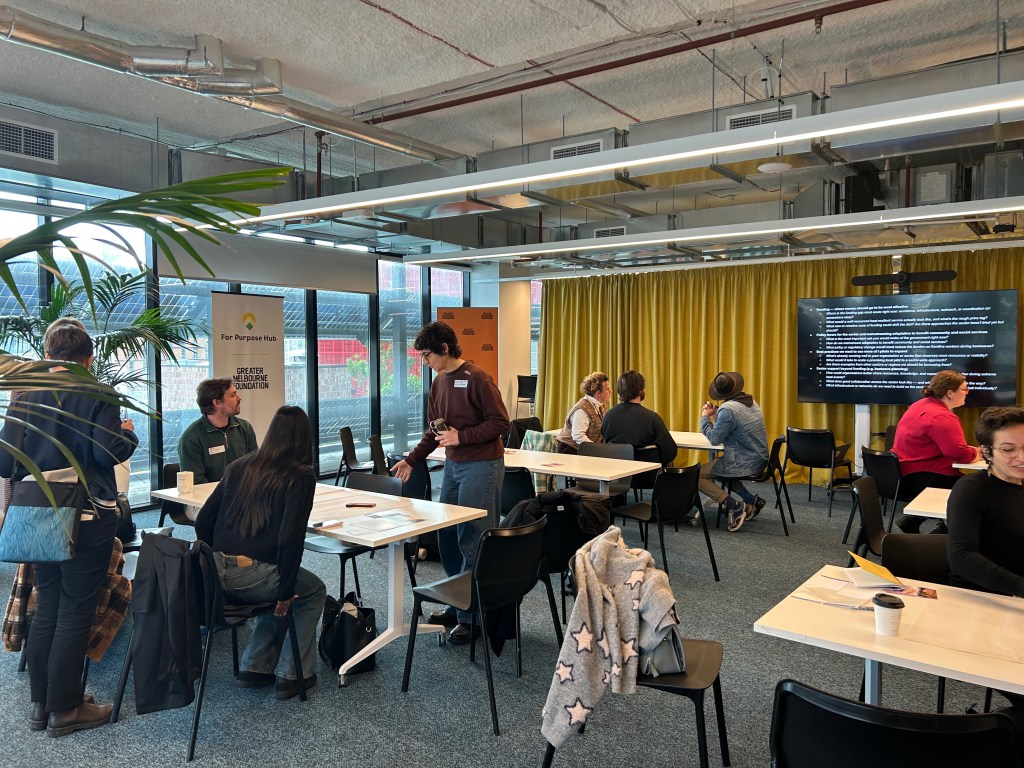
Participants rotated through four discussion stations exploring funding, policy reform, best practice and sector support. While conversations were diverse, common themes emerged across all four areas. Participants repeatedly argued that heat resilience is not fundamentally an environmental challenge. It is a governance, housing, infrastructure and social justice challenge.
Invest in Relationships, Not Just Projects
Many participants argued that effective heat resilience depends on relationships, coordination and collaboration.
Community organisations repeatedly identified coordination and workforce capacity as major gaps. Participants called for investment in community-led adaptation, knowledge sharing, relationship building and backbone organisations that can connect sectors and coordinate action.
As one participant noted, “it’s all about relationships, and that takes time.”
Recognise Heat as a Disaster
A strong consensus emerged around formally recognising heatwaves as disasters.
Participants argued that heat should be integrated into disaster planning frameworks at local, state and national levels. This would unlock more consistent funding, clearer responsibilities and stronger support for frontline services.
Many also called for stronger workplace health and safety standards relating to heat, particularly for essential workers and community sector staff.
Treat Social Services as Critical Infrastructure
Throughout the workshop, participants challenged traditional ideas about critical infrastructure.
Community organisations, neighbourhood houses, libraries, family violence services and other social infrastructure often become frontline responders during heat events. Yet they are rarely funded or planned for as such.
Participants called for greater recognition of the role social services play in keeping communities safe, connected and supported during extreme heat.
Focus on Housing
Housing was repeatedly identified as one of the most urgent priorities.
Participants highlighted the need for stronger rental standards, better thermal performance in housing, passive cooling measures, retrofits for older homes and greater accountability across housing providers.
Without cooler homes, many people remain vulnerable regardless of how many cooling centres or heat plans exist.
Collective Sense-Making
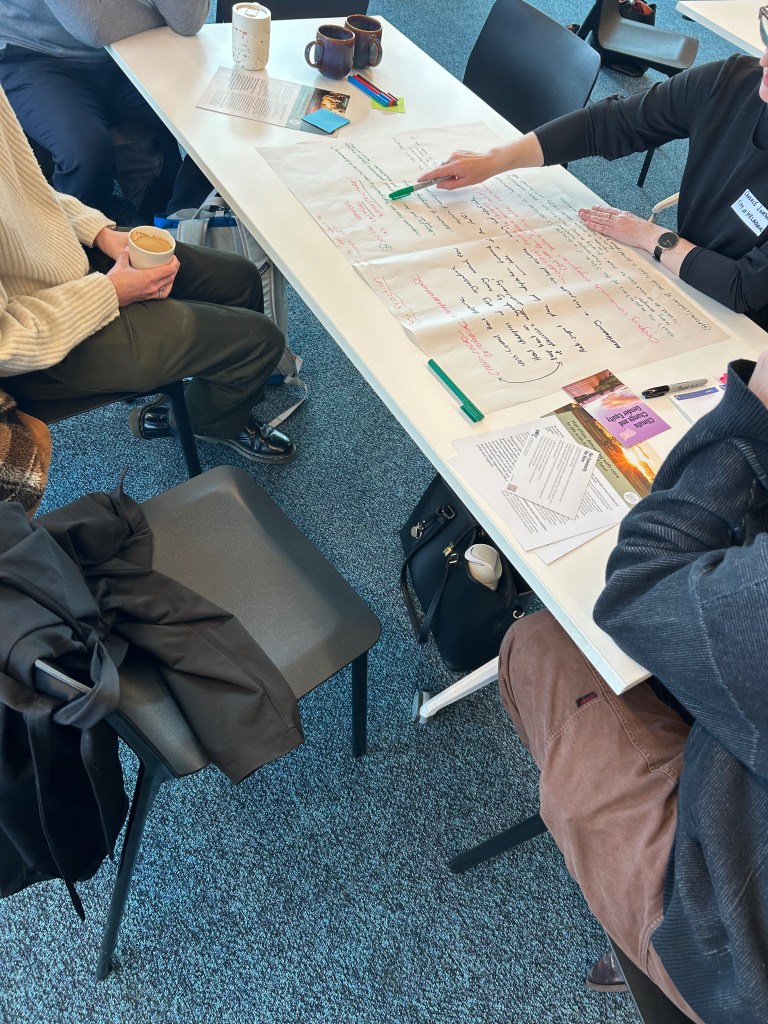
The workshop’s final session shifted from identifying solutions to considering how change might actually occur. Participants explored the evidence needed to support advocacy, the alliances required to influence decision-makers and the pathways through which adaptation could be mainstreamed across Melbourne and Victoria.
Building the Evidence Base
One of the workshop’s key objectives was identifying the evidence needed to influence decision-makers.
Participants highlighted several gaps in current knowledge, including:
- The hidden workload community organisations undertake during heat events.
- The impacts of heat on service demand and workforce capacity.
- Accessibility of cool spaces and transport networks.
- Lived experience data from diverse communities.
- The effectiveness of cooling centres and adaptation interventions.
- The social justice impacts of heat.
- Cost-benefit and avoided-cost analyses that can support investment cases.
There was strong agreement that stories and lived experience must sit alongside quantitative data to create a compelling case for action.
Who Needs to be Involved?
The discussion around allies revealed that heat adaptation remains a relatively fragmented policy space.
Participants identified a remarkably broad range of stakeholders who need to be engaged, including First Nations organisations, local government, housing providers, planners, unions, health insurers, researchers, philanthropy, emergency services, businesses and community groups.
The breadth of this list reflects the complexity of extreme heat itself. Unlike many policy issues, heat cuts across portfolios, sectors and levels of government.
However, participants also recognised that coalition-building remains one of the sector’s greatest challenges. Heat affects many organisations, but responsibility is often dispersed across multiple departments and institutions. This fragmentation can make advocacy difficult and dilute accountability.
Several participants noted the importance of finding political champions who can bridge these silos and elevate heat adaptation within government decision-making processes.
Pathways for change
The final discussion focused on pathways for change.
A notable theme was the need to move beyond viewing adaptation as a specialist climate issue. Participants repeatedly noted opportunities to embed heat considerations into existing policy agendas including housing affordability, workplace safety, public health, social justice, disaster resilience and cost-of-living pressures.
Underlying the discussion was a broader recognition that Melbourne’s future resilience will depend not only on climate policy but on addressing longstanding social inequities. Extreme heat exposes and amplifies existing vulnerabilities related to housing, income, disability, health and social isolation.
Building a heat-resilient city is not simply about reducing temperatures or responding to emergencies. It is about ensuring that everyone can access safe housing, reliable services, supportive communities and opportunities to flourish in a changing climate.
The challenge identified by participants is therefore not simply adapting to a hotter Melbourne. It is transforming the systems that determine who is protected, who is supported and who is left exposed when temperatures rise.
Looking Ahead
This deep dive into the future of community and social services in a hotter Melbourne presented a lot of opportunities to strengthen heat resilience across the state.
Participants called for adaptation planning that centres equity, lived experience and community leadership. They also highlighted the need for sustained investment that recognises the growing role community organisations play in helping people navigate climate impacts.
A future where people can safely access services, stay connected to their communities, live in comfortable homes and participate fully in civic life is possible. But achieving that future will require governments, communities and organisations to move beyond short-term responses and invest in long-term resilience.
The Greater Melbourne Heat Alliance will now consolidate workshop findings and continue working with partners to ensure the voices, experiences and ideas shared throughout the day help shape the next phase of heat adaptation across Victoria.
As Melbourne continues to warm, the question is no longer whether we need to adapt. The question is how quickly we can build the systems, relationships and resources needed to protect the communities most at risk.


Leave a Reply